





For Steve Carpenter, racing in Pro Alcohol wasn’t a spur-of-the-moment decision.
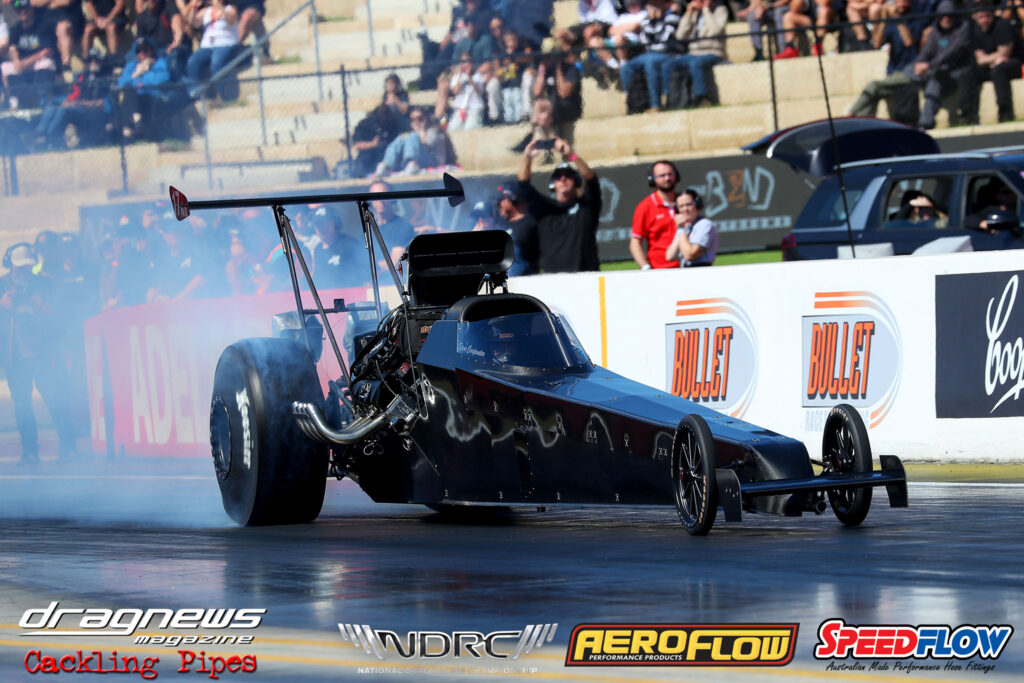
It was a dream years in the making, meticulously planned down to the smallest detail, and one that has already tested his resolve both on and off the race track.
As Carpenter prepares for the Gulf Western Oil Winternationals, Australia’s biggest drag racing event, he does so behind the wheel of one of the most technically advanced cars in the category and with a renewed appreciation for just how much it has taken to reach this point.
Five years ago, Carpenter set out to build his ultimate Pro Alcohol Dragster.
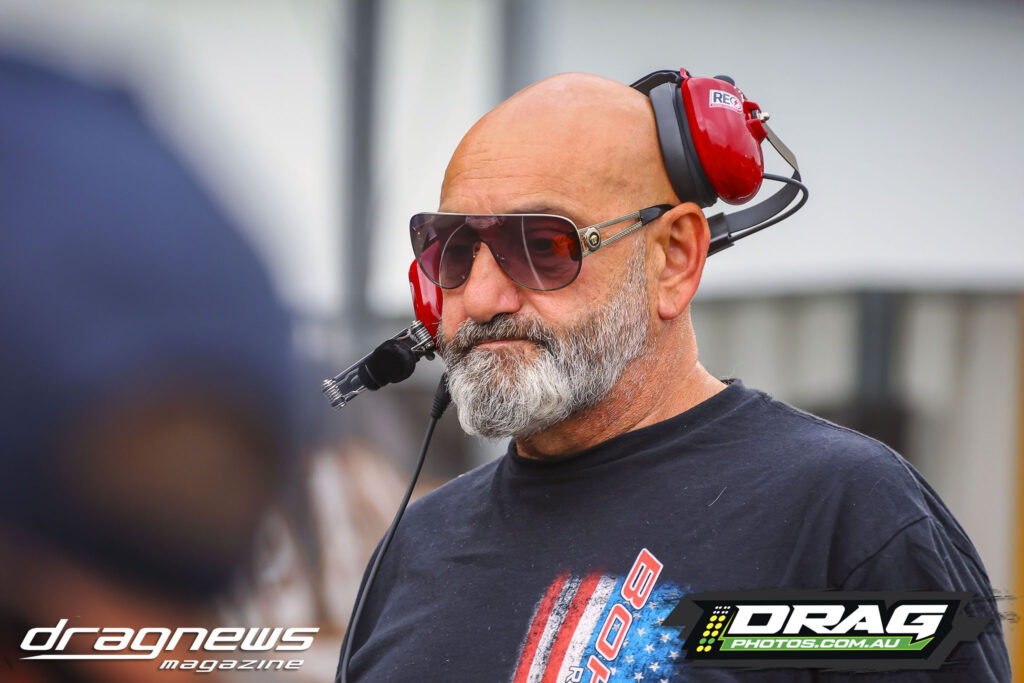
His first phone call was to veteran crew chief Jeffrey Cutajar.
“I told JC everything had to be new,” Carpenter recalled.
“I wanted to do this properly and I wanted to push the boundaries of the class using the latest technology available. If I was going to make the jump into Group One racing, I wanted to give myself every opportunity to be competitive.”
The ambitious project quickly gathered momentum.
Working alongside Cutajar, Carpenter enlisted Australian Top Fuel star Richie Crampton and respected US chassis builder Chase Copeland to help source and construct the perfect car.
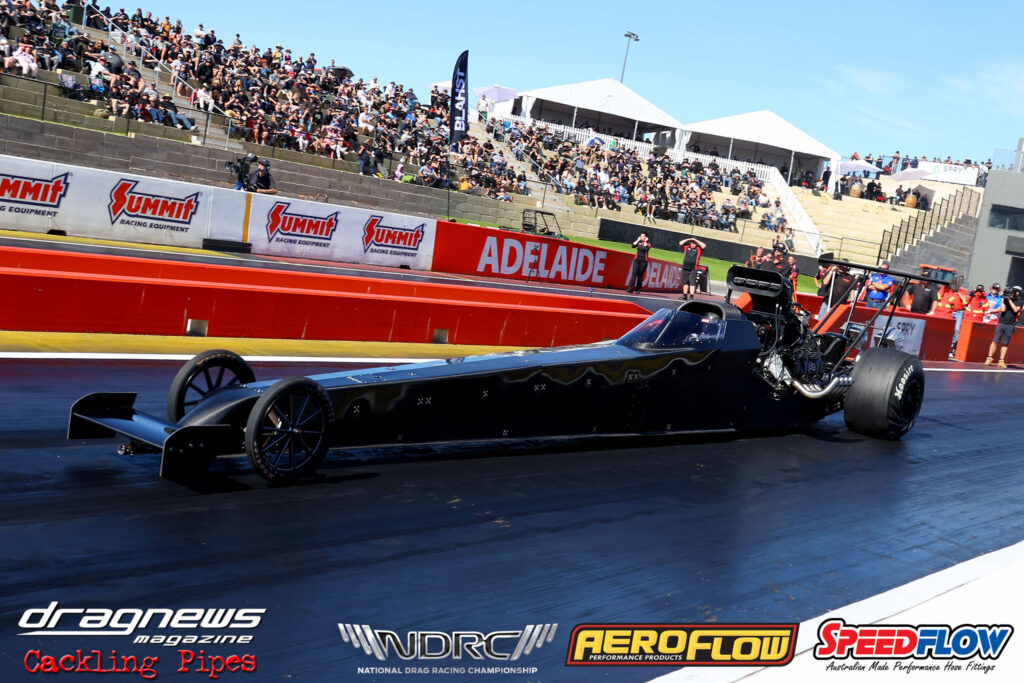
The result is a state-of-the-art Copeland-built dragster unlike almost anything else currently competing in Australian Pro Alcohol.
Every available carbon fibre and titanium option was selected during construction, while Carpenter also chose to move away from conventional driveline thinking.
The dragster utilises a Ty-Drive coupled to a billet Lenco transmission, dry sump lubrication system and a compact 473-cubic-inch BAE Hemi combination.
The package stretches an impressive 296 inches in length, just four inches shorter than a modern Top Fuel dragster.
“We keep the engine relatively small and lightweight, then rev it high to make the horsepower,” Carpenter explained.
“We’ve tried to approach the class differently.”
The innovation extends to the starting procedure itself.
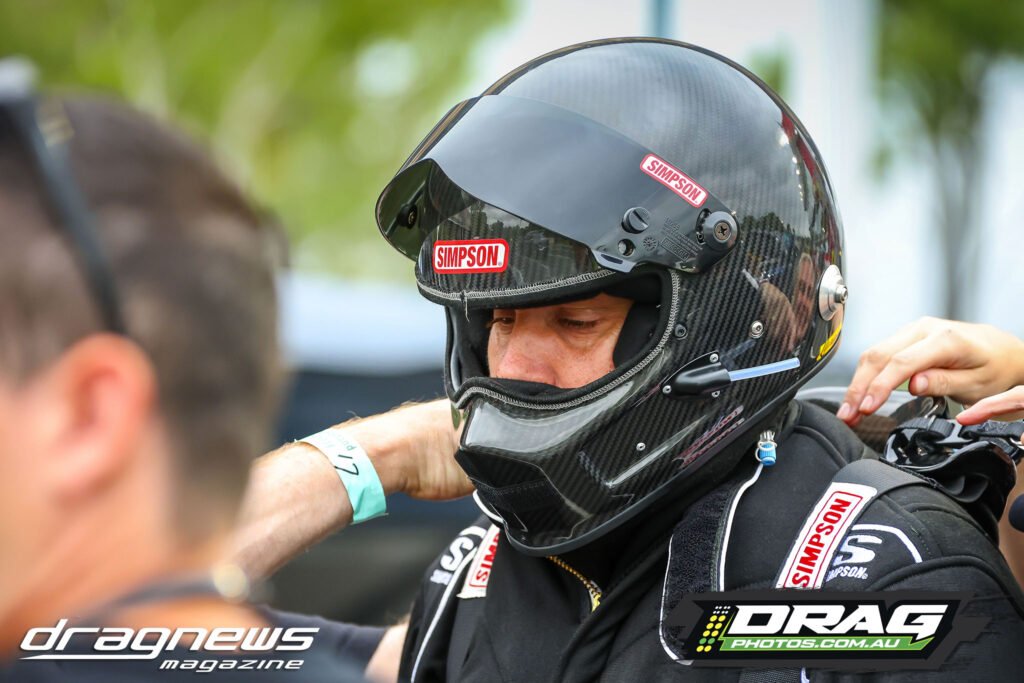
Unlike most alcohol dragsters, Carpenter can start and prime the car entirely from the cockpit without crew assistance.
“If people watch closely, no one pours fuel into the engine when we fire it up,” he said.
“I do everything from inside the car.”
The build represented the fulfilment of a lifelong racing ambition.
Then came January.
In testing for the season-opening Pro Alcohol Nationals at Willowbank, Carpenter suffered a high-speed crash that heavily damaged the dragster and threatened to derail months of preparation.
Fortunately, appearances proved worse than reality.
While carbon fibre body panels and front-end components required replacement or repair, the chassis escaped without structural damage.
“Jeff basically spent three weeks removing gravel trap debris from absolutely everything,” Carpenter laughed.
“The best part was there wasn’t any chassis damage. It was all superficial.”
Andrew Searle repaired and rebuilt the damaged carbon fibre panels while Chase Copeland flew to Australia to assist with replacement front suspension components.
The team had the car back together remarkably quickly.
The challenges didn’t stop there.
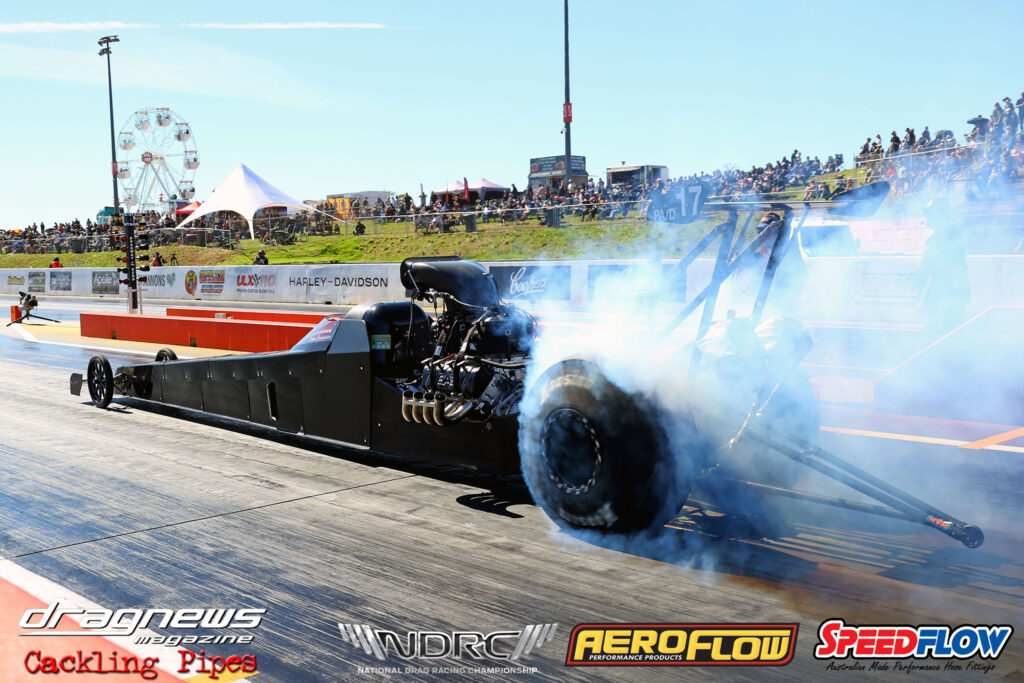
At April’s NDRC event at The Bend – the next championship event on the schedule – rain washed out testing and qualifying, forcing Carpenter straight into race day with virtually no recent track time.
His previous run had been the crash in Queensland.
“I hadn’t even lined up against another competitor since then,” Carpenter said.
“There was a lot going through my head just trying to make sure I did everything correctly.”
Despite making some mistakes, Carpenter considered the weekend a success.
“We packed up a straight race car at the end of the event, and after what happened in January that felt like an achievement.”
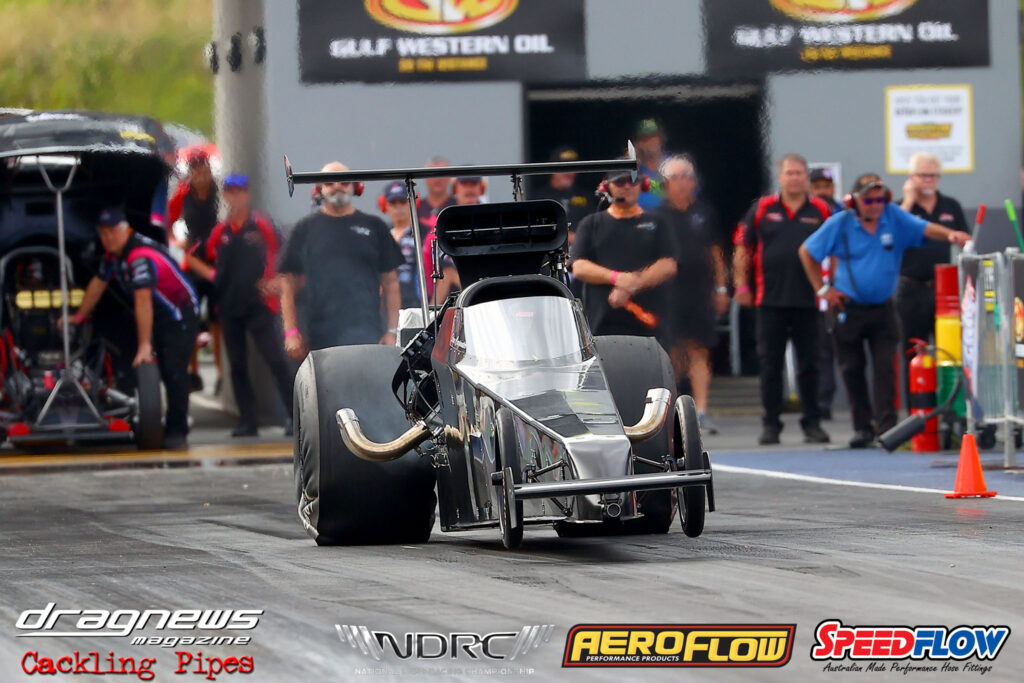
More recently at the Nitro Champs, the team has been chasing a series of performance gremlins as they continue learning the intricacies of an entirely new combination. Extensive data analysis eventually pointed to the torque converter as a major culprit. As power levels increased, the engine was effectively overpowering the converter.
The solution ahead of the Winternationals has been significant. A brand-new FTI converter has been installed, along with Carpenter’s second billet Lenco transmission featuring revised gear ratios. The team hopes the changes will finally allow the dragster to perform as intended.
“Everything is new and it’s difficult to work through issues when you’re also a new driver learning the car,” Carpenter said.
“We think we’ve found a major part of the problem and hopefully we’ll be back on track at the Winter Warm Ups and able to focus on making laps from A to B.”
While the racing challenges have been significant, they pale in comparison to the personal battle Carpenter faced away from the track.
Just 12 months ago he was fighting bowel cancer.
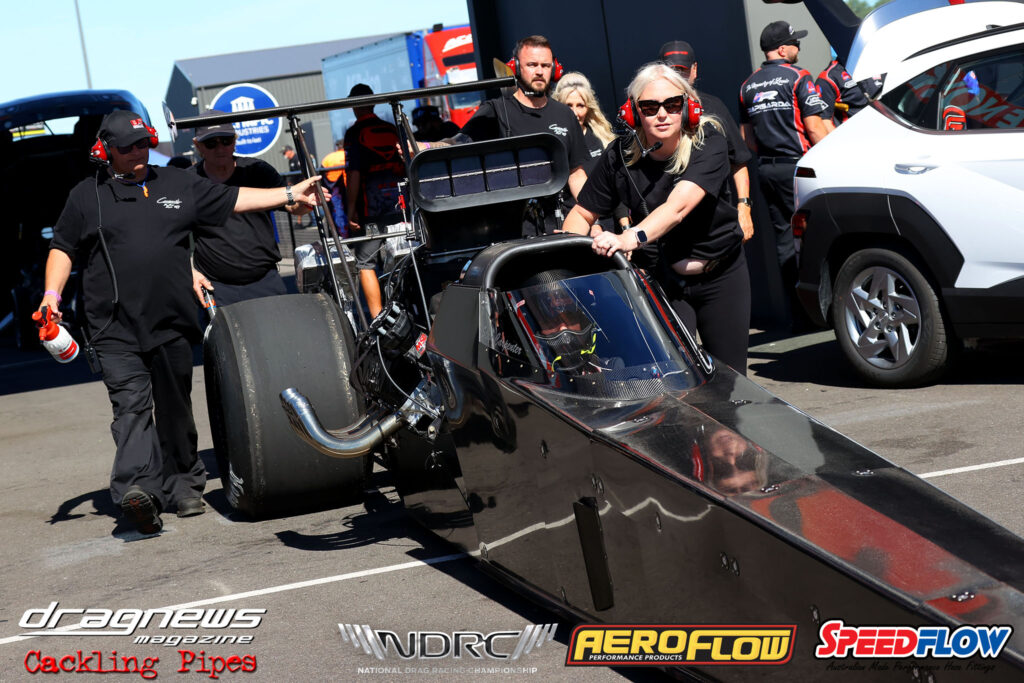
Throughout that difficult period, his wife Melissa never left his side.
“This time last year I was going through cancer treatment and Melissa was there every step of the way,” Carpenter said.
“When I wasn’t sure what was going to happen and had to take three months away from work, JC told me not to worry and that he’d finish the dragster no matter what.
“That meant everything to me.”
The support extends throughout the entire Carpenter family, including daughters Brooke, Bailey and Bella, who will be following the Winternationals from Ceduna via the live stream, along with Steve’s father and sisters.
As the team heads to Willowbank Raceway, outright performance isn’t necessarily the primary focus.
For Carpenter, every run is another step in unlocking the potential of one of the most sophisticated Pro Alcohol dragsters ever built in Australia.
The dream that began five years ago is still very much a work in progress.
But after overcoming a major crash, battling cancer and continuing to refine an innovative race car package, Carpenter arrives at the Winternationals ready for the next chapter.
And if the latest changes deliver what the team expects, Australia’s Pro Alcohol ranks may soon discover exactly why Carpenter spent five years building his dream from the ground up.